What underpinning is
Underpinning strengthens the foundation of an existing building: the footings under brick walls, or a slab. The BPC says foundation movement is often caused by changing moisture conditions in the soil, but can also come from soil settling after a house is built, erosion of sandy soils, or tree roots growing under footings (BPC).
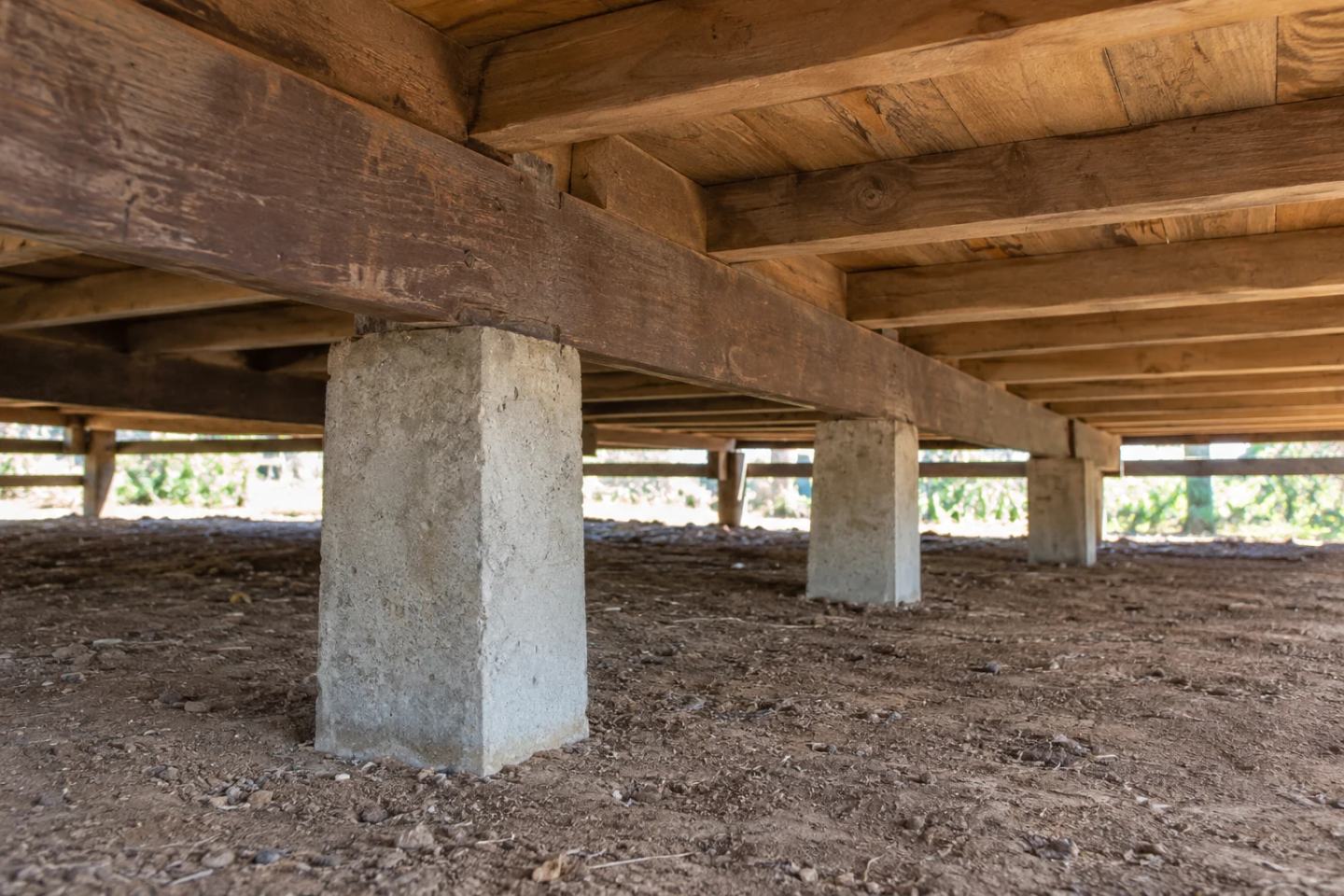
It’s a different job from restumping. Restumping replaces the stumps under a timber floor. Underpinning works on the foundation itself: the footings under the walls, or a slab. If your house has a timber floor on stumps, see restumping.
Signs to look for
The BPC says foundation movement can cause cracks in walls and floors, bulging walls, and windows and doors that stick or distort. It treats wall cracks under 1 mm wide as normal movement, says cracks of 1 to 5 mm should be watched in all weather over a full year, and calls cracks over 5 mm significant (BPC).
Clay-rich soils shrink when they dry and swell when they get wet. The BPC lists cracking of walls and slabs, distortion of building elements and uneven floor movement among the effects (BPC).
None of these signs, on its own, tells you what a house needs. An inspection does.
Start with the cause
Underpinning strengthens the foundation, so it’s worth finding out what made the ground move as well. The BPC says foundation movement is often caused by changing moisture in the soil, and also by soil settling after a house is built, erosion of sandy soils, or tree roots growing under footings. For significant cracking, it says the cause should be investigated by an endorsed civil or structural engineer (BPC).
Some causes you can fix yourself. The BPC suggests repairing leaking gutters, hot water systems, air conditioners, tanks, taps and hoses promptly, sloping soil, paths and garden beds away from the house, and not digging deeper than the base of a footing next to the house.
If your home is less than 10 years old, the BPC says to contact your builder for advice first.
The building permit
Underpinning needs a building permit (Campaspe Shire building fact sheet). The builder or a building surveyor usually arranges it. In Greater Geelong, the City issues permits, or you can appoint a private building surveyor (City of Greater Geelong).
If the house is in a Heritage Overlay, check with the City before work starts. In a heritage precinct, external buildings and works need a planning permit (City of Greater Geelong).
Who does the work
A registered builder. The BPC’s public register shows whether a builder’s registration is current, what type of work they can do, and any conditions on it (BPC). Check it before you sign.
For larger jobs the builder must arrange Home Warranty insurance through the BPC. Ask for the Notice of Cover, and check that the builder’s name, registration number, the site address and the work covered match your contract (BPC).
Describe the changes you've noticed
Tell us which walls or rooms are affected, when you first noticed the change and the type of house, if you know. With your permission, we pass your enquiry to a registered local builder who does underpinning. They can discuss the next step with you.
Ask about your property